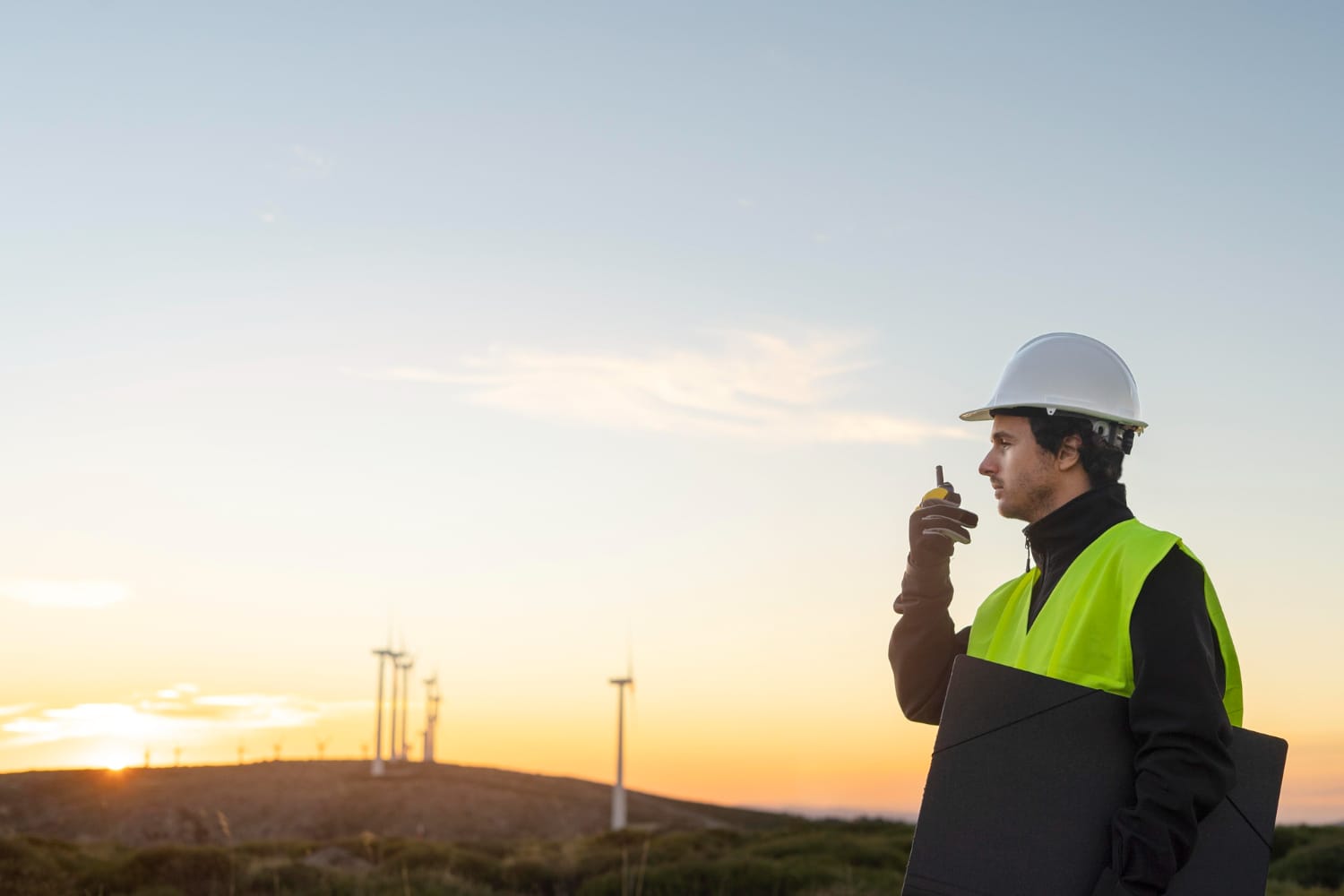
Across industries, critical workers aren’t sitting behind monitors; they’re on the move, operating equipment, supervising students, inspecting assets, or responding to incidents. Yet most operational and security alerting still assumes someone is watching a dashboard.
That assumption creates real risk. In operational environments, delayed awareness is a leading factor in preventable safety and security incidents. Safety investigations consistently identify communication delays, missed alarms, and gaps in situational awareness as contributors to escalation. According to OSHA and NFPA analyses, many workplace injuries occur not because hazards go undetected, but because responses are delayed or misrouted once hazards are identified. Studies in industrial safety have found that more than 70% of serious incidents involve breakdowns in coordination or communication in the first minutes of an event. When alerts don’t reach the right worker fast enough, hazards compound, evacuations take longer, and emergency responses become reactive rather than controlled.
The stakes are simple: awareness must travel to the worker, not the other way around.
The No-Screeners
The modern workforce is becoming more mobile, more distributed, and more operationally critical. These “no-screen workers” are the individuals whose jobs require situational awareness in the physical world, not attention on dashboards. Their hands are busy, their eyes are occupied, and their decisions directly affect safety, continuity, and productivity. These workers don’t have the luxury of swiveling to a screen when something happens; the information must come to them.
This group is also growing. Several macro trends are driving the increase in no-screener populations across industries:
- Automation & Industry 4.0 have shifted physical tasks to higher complexity, requiring technicians, operators, and responders on the floor rather than behind monitors.
- Labor shortages in dispatch & control roles mean fewer operators watching screens, pushing situational awareness to the field.
- Distributed site models (remote mines, multi-campus hospitals, distributed logistics yards) decentralize operations and require real-time field decision-making.
- Regulatory pressure on safety & compliance increases demand for accountability and rapid response among workers in motion.
- Hybrid & shift-based staffing creates windows when screens aren’t consistently monitored.
- Mobile-first workforce generations favor radios, phones, and field devices over fixed consoles.
These factors expand not only the number of no-screeners but also the environments in which real-time operational awareness is required outside a control room.
Where No-Screeners Work Today
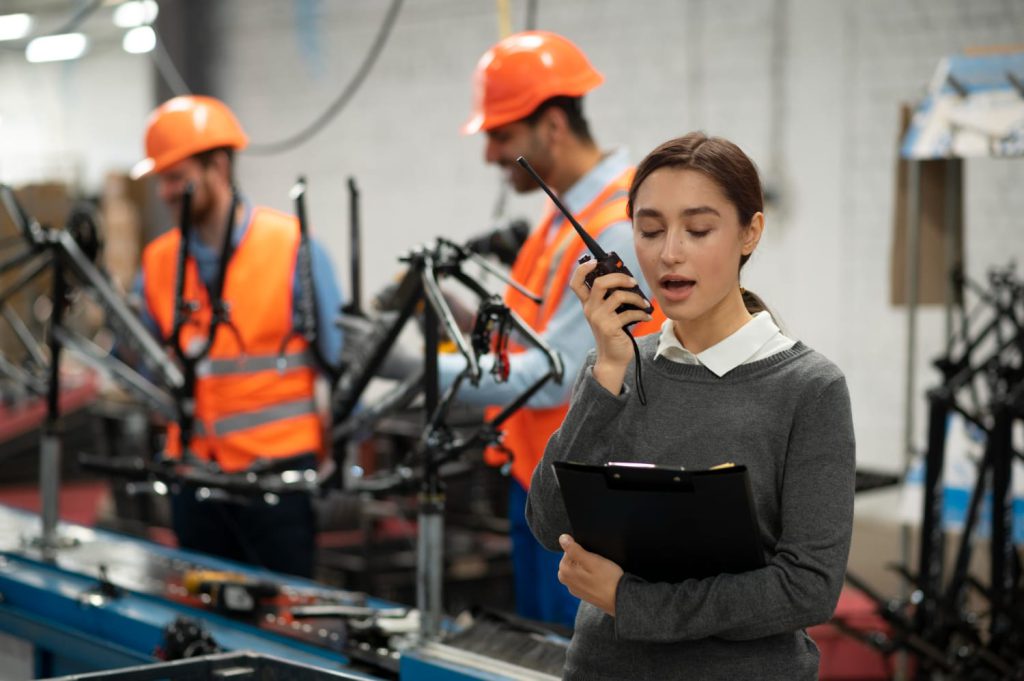
No-screeners appear in nearly every sector, but they are most concentrated in industries where physical environments and real-time field decisions dominate:
- Manufacturing & Processing: Operators, maintenance, and technicians manage machinery, workflows, and alarms in motion.
- Mining & Extraction: Crews and supervisors navigate remote, hazardous environments where radios are the primary means of communication.
- Healthcare & Campus Security: Security officers, responders, and clinical operations staff who need location and incident context while moving.
- Education & Transportation: Bus attendants, transit supervisors, and yard staff are coordinating without stationary consoles.
- Utilities & Field Services: Lone workers, field inspectors, and repair crews rely on radios and mobile devices to communicate.
- Oil & Gas / Energy: Field technicians and control teams work in distributed environments with high safety requirements.
- Logistics & Warehousing: Forklift operators, supervisors, and yard crews manage moving assets and shipments.
In all of these cases, coordination happens while work is underway, not before or behind a screen.
As workplaces become more distributed and more automated, the number of no-screeners increases, along with the need for technology that can deliver awareness directly to them.
Why Screen-Based Alerts Fail in Mobile Environments
Screens assume someone is watching. In mobile environments, that assumption quickly breaks down.
Screen-based alerting introduces multiple operational failure points, starting with the most basic:
1. Alerts Get Trapped on Dashboards
- Industrial systems (HMI, SCADA, IoT, analytics, VMS) generate continuous signals
- But alerts remain siloed behind terminals and consoles
- If no one is watching the right screen at the right moment, detection never becomes action
2. Staffing Realities Limit Monitoring
- Dispatch and control rooms aren’t always staffed 24/7
- Even when staffed, the ratio of screens to operators keeps expanding
- Off-shift periods (nights, weekends, low-volume windows) are especially vulnerable
- Many industries rely on “catch it if you see it,” which fails the moment something slips through
3. Physical & Cognitive Constraints in the Field
- Workers like operators, technicians, bus attendants, security officers, and responders can’t stare at screens while working
- Their hands are occupied, and attention is focused on the physical environment
- Dividing attention between dashboards and hazards increases the likelihood of missed signals
4. Manual Escalation is Slow & Error-Prone
- Even when alerts are seen, routing them to the right person requires human coordination
- This involves identifying roles, matching location, and communicating instructions
- During emergencies, outages, shift changes, or evacuations, this bottleneck collapses first
5. Detection Becomes Reactive, Not Preventive
- Screen-based systems often function as post-event review tools, not real-time intervention tools
- Example failure modes:
- Forklift enters restricted zone
- Conveyor overheats
- Fire panel triggers supervisory condition
- A lone worker stops moving
- A door holds open
- By the time the alert is noticed, the window for prevention may already have passed.
These failure points compound during emergencies, when clarity and speed matter most. Incidents that should take seconds to escalate instead take minutes. Minutes become investigations, downtime events, or safety findings. In extreme cases, screens become artifacts of hindsight rather than instruments of prevention.
Real-World Use Cases
These problems aren’t theoretical – they show up across industries every day.
Manufacturing: Reducing Costly Downtime
Manufacturing clients report millions in lost revenue due to unplanned downtime. The issue isn’t just equipment failure; it’s delayed awareness. By routing SCADA/PLC alarms directly to radios via text-to-speech, downtime decreases because alerts are delivered to the technician rather than waiting for someone to notice a screen.
School Transportation: Geo-Fence Alerts
Bus attendants can’t monitor screens while lining up children. With geo-fence alerts sent directly to radios (e.g., “Bus 21 arriving”), they can load safely and efficiently without returning to a dispatch desk.
Mining: Unified Operational View
Remote mining operations often run without dispatchers. Routing alerts and location data to radios and field devices provides operators with situational awareness typically reserved for control rooms, without requiring a control room.
Healthcare Security: Text & Audio on Radios
In hospitals and campuses, security officers rely on voice and mobility. Text and audio alerts provide actionable location context (e.g., zone & camera & incident) without requiring them to watch a VMS screen.
The New Operational Standard: Alerts That Move to the Worker
Across these examples, a new pattern appears:
- Radio-first alerting
- Multi-channel (text, voice, TTS)
- Automated routing
- Context-aware (location, device, event)
- Proactive intervention vs. reactive review
The future isn’t more dashboards, it’s distributed awareness.
The Teldio Approach

Closing the gap between detection and response requires more than data visibility; it requires systems that move awareness to the worker, regardless of platform, device, or communication channel. Teldio enables this shift through three complementary capabilities that work together to support distributed, screenless, and mobile teams.
Teldio Fabric: Connecting Detection to Action
Teldio Fabric serves as the connective layer that links disparate detection systems, including video analytics (such as Avigilon Unity), access control, sensors, SCADA/PLC, and environmental alarms, with the communication endpoints workers rely on in the field. Instead of stacking dashboards or hoping an operator notices an alert, Fabric routes machine-generated signals into actionable workflows, ensuring critical information does not remain trapped inside a single system.
For no-screen workers, the benefit is straightforward: detection triggers are automatically translated into communication channels they already use, MOTOTRBO radios, WAVE PTX, mobile devices, PA systems, or automated voice/text announcements. Teldio Fabric enhances the value of existing infrastructure, turning passive awareness into active operational coordination.
Teldio Edge Gateway (TEG): Routing and Escalation to People, Not Dashboards
The Teldio Edge Gateway enables multi-channel alerting and escalation. When an event occurs, TEG determines how to deliver the alert and who needs to receive it, using combinations of:
- Text-to-speech for MOTOTRBO radios
- Text messages for WAVE PTX and mobile devices
- SMS or email messaging for supervisors
- VoIP or phone-based notifications
- PA system and speaker activations
- Strobes or sirens for high-severity scenarios
This routing and escalation model complements MSI dispatch environments by ensuring that when an alert is missed or unacknowledged, TEG escalates to the next channel or role, rather than relying solely on human observation. The result is faster response, reduced ambiguity, and better operational coordination, especially in distributed environments.
Teldio TruFleet: Location Intelligence for Relevance and Precision
Teldio TruFleet adds the spatial dimension: where the event is happening and who is closest or most relevant to respond. Teldio TruFleet provides indoor and outdoor location tracking for personnel, vehicles, and assets, along with geofence logic that triggers alerts based on movement, proximity, or zone-specific rules.
In Motorola Solutions deployments, Teldio TruFleet complements Avtec Scout consoles by providing location overlays and proximity-based alerting, helping dispatchers and field responders understand not just what happened, but where and who should handle it.
This eliminates broadcast-style alerting and reduces cognitive load by directing the event to:
- the nearest technician,
- the assigned zone supervisor,
- the responding security officer, or
- the on-shift bus attendant.
This targeted approach reduces noise and minimizes cognitive load for field teams who can’t afford to sift through irrelevant information.
Helping No-Screeners Do Their Jobs More Safely and Efficiently
Together, Teldio Fabric, TEG, and Teldio TruFleet transform industrial and operational environments by enabling screenless awareness. Rather than pulling workers back into control rooms or dispatch centers, Teldio pushes information forward to where work is actually happening. This empowers no-screeners to:
- Respond faster without waiting for instructions
- Maintain focus on physical tasks and safety
- Avoid fragmented or delayed communication
- Receive alerts in formats that match their environment (voice, text, audio, etc.)
- Participate in coordinated response without dashboards
Workers Don’t Need Dashboards, They Need Awareness
The workforce isn’t becoming more desk-bound; it’s becoming more distributed. As industries embrace digital transformation and Industry 4.0, organizations must rethink where awareness lives and how quickly it moves.
Automating awareness is a key operational layer that turns detection into response without requiring more screens, more consoles, or more operators.