


80,000 Birds at Risk: Why Agricultural Facilities Need Reliable Environmental Alarm Delivery
- Agricultural facilities often have sensors, panels, and monitoring systems that can detect temperature spikes, fan failures, ventilation issues, and other environmental alarms. But detection is only useful if the alert reaches the right person fast enough to act. In mobile farm environments, alarms can lose their value when they remain trapped in a local panel, dashboard, or a disconnected system.
- Teldio helps close that gap by connecting environmental telemetry and alarm states to radio communications, allowing critical alerts to reach farm managers and mobile teams quickly. In one poultry operation, the proposed workflow monitored four contact closures per site across six barns and routed temperature and fan alarms to the farm manager’s radio in under 10 seconds.
- The takeaway: resilient agricultural facilities are not built only around sensors and alarms. They are built around response pathways that get the right information to the right person in time to act.
When Detection Isn’t Enough
In agricultural facilities, environmental alarms are not just operational notifications. They can be the difference between a controlled response and a major animal-welfare or production-loss event. Large-scale poultry operations depend on stable temperature, ventilation, fan performance, and environmental control systems. When those systems fail, the risk can escalate quickly.
Many facilities already have sensors, alarm panels, contact closures, or monitoring systems in place. But detection alone is not enough. The real question is whether the alert reaches the right person fast enough to act. An alarm that never reaches the farm manager is ineffective; agricultural facilities need reliable alarm delivery, not just environmental monitoring.
In one large-scale poultry operation, approximately 80,000 birds were at risk, with potential loss exposure of around $100,000, if critical environmental alarms failed to reach the right person in time. In agricultural environments, the gap between “the system detected a problem” and “the right person knew about it” can become the difference between prevention and loss.
Want to Integrate Detection into Your Ecosystem?What a Missed Environmental Alarm Looks Like in Practice
Imagine a poultry barn experiences a temperature spike.
The environmental system detects the issue. A local alarm is generated. The monitoring system may be doing exactly what it was designed to do.
But the farm manager is not standing near the alarm panel. They are not watching a dashboard. They may be moving between barns, checking equipment, coordinating staff, or working elsewhere on the site.
The sensor may have worked. The alarm may have existed. The monitoring system may have detected the problem.
But if the alert does not reach the right person quickly enough, the condition continues. The response window narrows. What began as a manageable environmental issue can quickly become a much larger operational risk.
The problem was not detection. The problem was delivery.
The Real Risk Isn’t Just System Failure, It’s Communication Failure
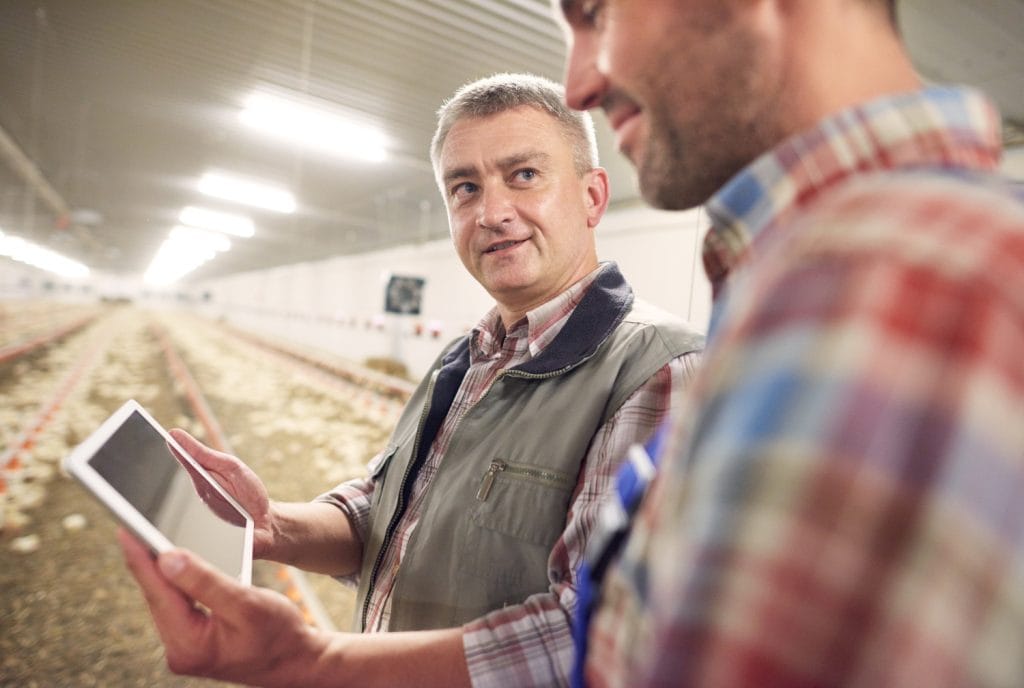 Agricultural facilities often have systems that monitor critical conditions. These systems may detect temperature changes, fan failures, ventilation problems, equipment faults, power issues, or other environmental alarms.
But the risk is not always that the facility lacks monitoring. The risk is that alarms remain trapped inside a local system, dashboard, or panel.
That distinction matters. “Did the alarm trigger?” is not the same question as “Did the right person receive it?”
For agricultural teams, this is especially important because farm operations are inherently mobile. Managers and staff move between barns, equipment areas, offices, outdoor spaces, and remote parts of the facility. They are not always near a screen, and they may not have time to manually check multiple systems throughout the day.
In agriculture, an alarm only creates value when it reaches someone who can act.
The Root Cause: Environmental Alerts Don’t Always Reach Mobile Teams
In many agricultural environments, environmental systems generate alarms, and contact closures indicate alarm states. But those alerts may remain within the facility’s system. The farm manager may be away from the panel. The team may rely on radios for immediate communication, but the environmental system may not be connected to that radio network.
That creates a gap between environmental telemetry and frontline communication. The facility system knows something is wrong. The farm manager may not. The condition may continue. The operation may lose valuable response time.
That gap can lead to delayed responses, animal-welfare risks, potential production losses, increased operational uncertainty, and reduced confidence in the reliability of alarms.
When alerts do not travel with mobile teams, response depends on chance instead of design.
How Teldio Bridges Environmental Telemetry to Radio
Teldio helps agricultural facilities connect environmental telemetry and alarm states to radio communications, allowing critical alerts to reach mobile teams faster.
Using telemetry devices, contact closures from environmental systems can be monitored and converted into actionable radio alerts. Instead of requiring someone to notice an alarm locally, Teldio routes that information to the communication channel that farm teams already use.
In the poultry operation, the proposed solution monitored four contact closures per site across six barns and routed critical conditions, such as temperature and fan alarms, to the farm manager’s radio in under 10 seconds.
That kind of workflow matters because the alerts are tied to the conditions that directly affect facility performance and animal welfare, including temperature alarms, fan alarms, ventilation alerts, environmental fault conditions, and equipment status events.
Teldio turns environmental alarm states into real-time communication. Instead of waiting for someone to find the alarm, Teldio helps send it directly to the person responsible for the response.
Enhance Your CommunicationWhy Radio Alerts Matter in Agricultural Facilities
Radios remain among the most effective communication tools in agricultural and industrial environments because they are immediate, familiar, and designed for mobile teams.
In farm environments, managers are not always near a computer. Workers move between barns and outdoor areas. Connectivity can vary across large sites. Response needs to happen quickly. Teams already trust radio communication for urgent updates.
Dashboards and panels are useful when viewed. Radio alerts can reach people while they are moving.
That makes radio a practical bridge between facility systems and real-world response. When a critical environmental alarm occurs, the alert should not sit in a system waiting to be discovered. It should move through the communication network that the team already depends on.
When the team is mobile, the alert needs to be mobile too.
From Passive Monitoring to Active Response
The goal is not simply to monitor environmental conditions. The goal is to close the loop between detection and response.
Without reliable alert delivery, the process can remain passive. An environmental system detects a problem. The alert remains local or delayed. The farm manager may not know right away. Response depends on manual discovery.
With telemetry-to-radio alerting, the workflow becomes more active. A critical condition triggers an alert. Telemetry captures the alarm state. Teldio routes the alert to the radio. The farm manager receives the message quickly. The team can respond sooner.
Operational reliability depends on what happens after the alarm is generated.
Monitoring tells you something is wrong. Alert delivery helps you take action.
The Cost of Delayed Response in Poultry Operations
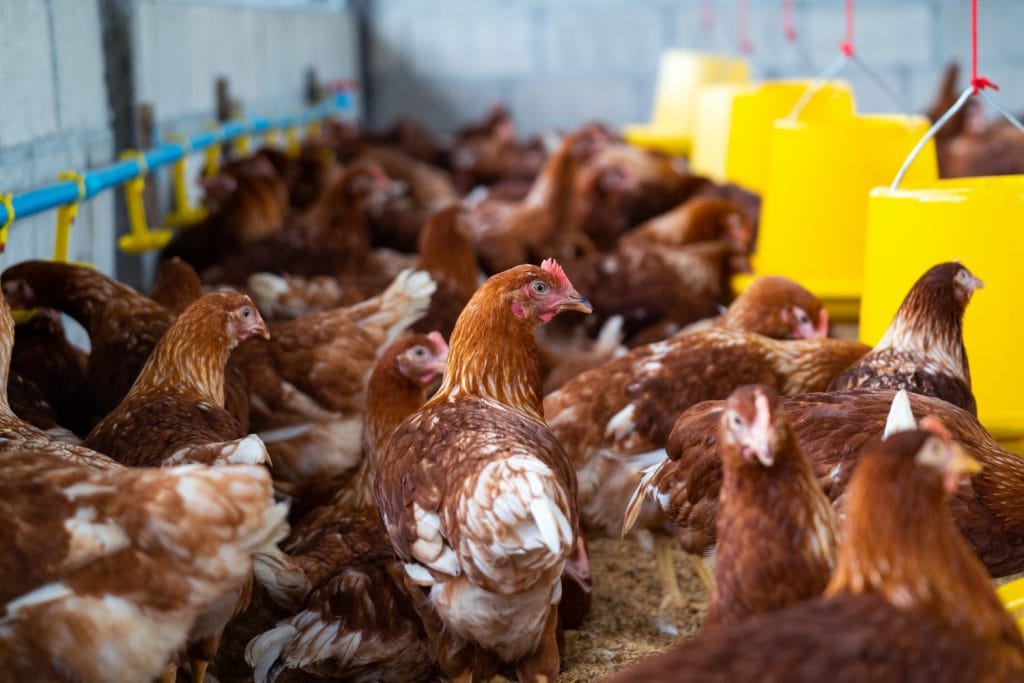 In large-scale poultry environments, environmental failures can affect thousands of birds at once. A missed temperature or ventilation alarm can quickly become a major welfare and financial risk.
In the customer scenario, approximately 80,000 birds were at risk, with potential loss exposure of around $100,000.
The point is not that every alarm becomes a disaster. The point is that agricultural operations need alarm delivery systems that match the speed and scale of the risk.
Environmental control is tied directly to animal welfare. Ventilation and fan systems support safe barn conditions. Temperature deviations can escalate quickly. Delayed response can increase operational and financial impact.
A missed environmental alarm is not just a technical issue. It can pose issues for animal welfare, production, and revenue.
Why This Matters Beyond One Poultry Facility
The same principle applies across agricultural environments where environmental conditions affect operations.
Poultry barns, livestock facilities, greenhouses, cold storage, feed operations, processing environments, equipment rooms, and remote agricultural sites all depend on reliable awareness of critical conditions.
Those conditions can include temperature, ventilation, fan operation, humidity, power status, equipment faults, and environmental control alarms.
Any facility that depends on environmental control also depends on reliable alarm delivery. The more dependent an operation is on controlled conditions, the more important it becomes to ensure alerts reach the right people quickly.
Building More Resilient Agricultural Facilities
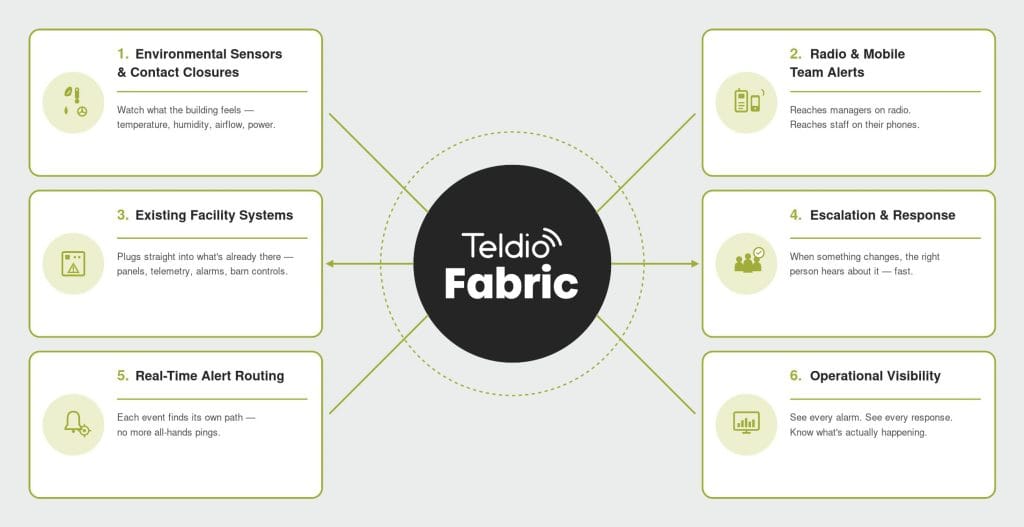
Resilient agricultural facilities are not built only around sensors and alarms. They are built around response pathways.
Reliable alarm delivery requires visibility into critical alarm states, integration with existing facility systems, fast routing to responsible teams, communication channels that work for mobile staff, and clear escalation when critical conditions occur.
Teldio helps agricultural facilities extend the value of existing systems by connecting environmental telemetry to practical communication workflows. This allows teams to use the systems they already rely on while improving the delivery of critical alerts.
A resilient facility is not just one that detects problems. It is one that can get the right information to the right person in time to act.
From Environmental Monitoring to Operational Confidence
The central issue is not whether agricultural facilities can monitor conditions. Many already can. The challenge is ensuring alarms become timely, actionable communication.
Teldio helps bridge the gap between environmental systems and frontline response by routing critical alerts to radios, supporting faster awareness and more confident action.
Before, an alarm existed somewhere in the system. After, the farm manager receives the alert directly.
The future of agricultural facility alerting is not just monitoring. It is a reliable, actionable alarm delivery.
Talk to Teldio About Agricultural Facility Alerting
Teldio helps agricultural facilities connect environmental telemetry, alarm systems, and radio communications so critical alerts reach the right people faster.
Whether you are managing poultry barns, livestock facilities, greenhouses, cold storage, or other agricultural environments, Teldio can help turn critical environmental alarms into actionable communication for the teams responsible for response.
Speak with Teldio about bringing critical agricultural facility alarms directly to your radio network.
Ready to book a demo?