

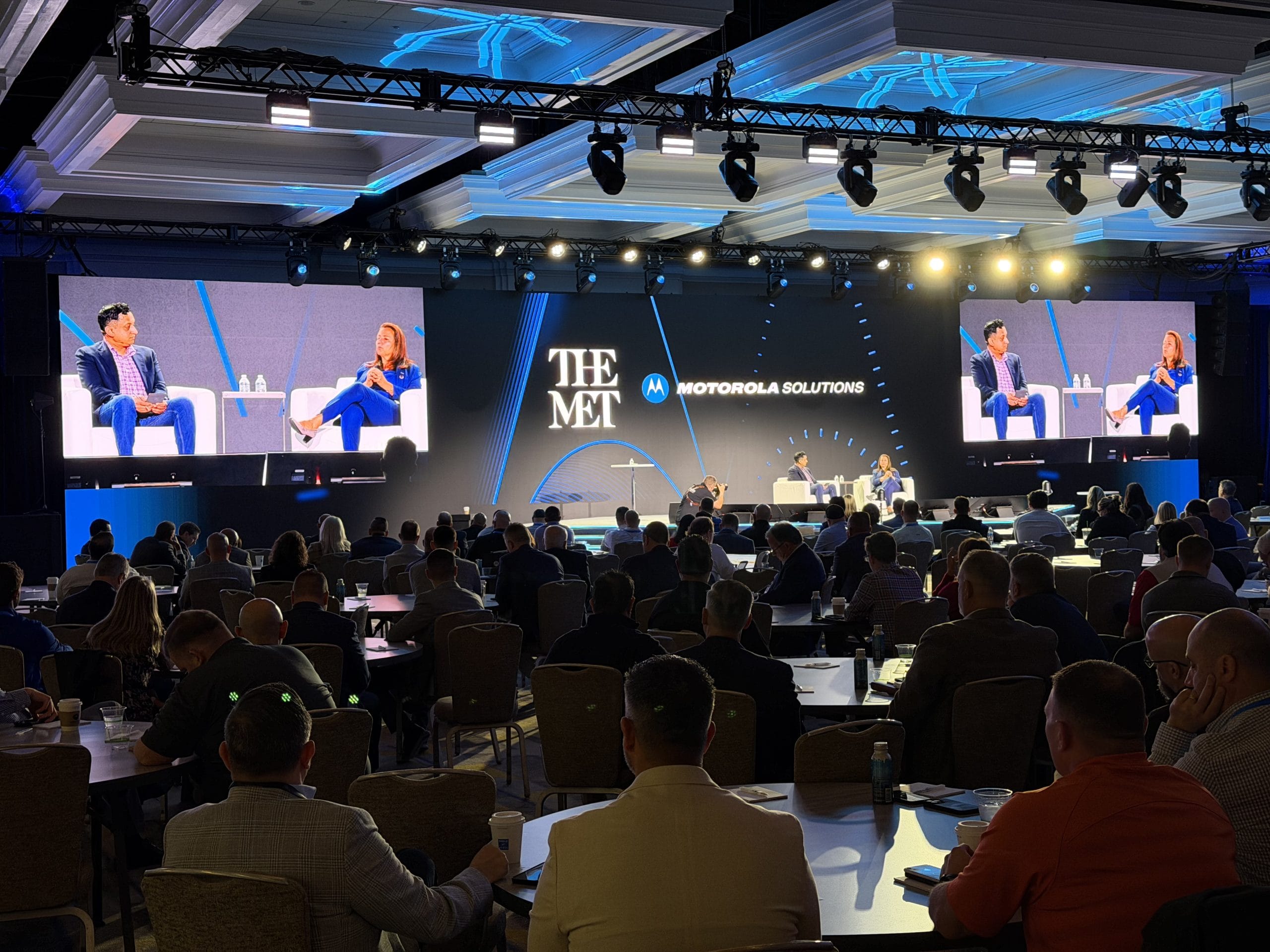
3 Key Takeaways From the Motorola Solutions 2026 Partner Advantage Summit
This year’s Motorola Solutions Partner Advantage Summit in San Diego brought together many security industry leaders to focus on real-world issues, including the integration of AI capabilities and the convergence of physical and cyber security. The conversations I had went beyond industry buzzwords and focused on practical solutions. Partners shared honest feedback on the challenges they’re facing and the innovations they’re seeking. Here are three standout themes:
1. AI is table stakes, but notification fatigue is the real problem to solve
AI is now expected to be available in every security solution, but the real issue that gets people talking is managing the volume of alerts. The conversation at the Summit moved past “are you using AI?” to “how are you keeping humans in the loop without drowning them in alerts?” Human-in-the-loop AI integration models are maturing fast, but they only work when the right person gets the right notification through the right channel at the right time.
For example, Teldio Fabric helps organizations running multiple systems (VMS, PSIM, AI/SOP tools, and legacy platforms) deliver tailored notifications to each user type. A security operator monitoring a video wall requires different information than a supervisor overseeing a PSIM dashboard. With Teldio Fabric, alerts, acknowledgements, and context are synchronized to reduce duplication and make sure no critical information is missed.
2. Closed systems are falling out of favour, fast
A recurring message from partners was clear: manufacturers who make integration difficult are losing relevance. Multiple partners said something along the lines of “those guys make it hard; nobody wants to work with them anymore.” The push for seamless integration, especially to help customers move away from legacy setups, is only getting stronger. Partners want flexibility to combine the best platforms, and they’re moving away from vendors who create friction.
AI-driven workflows are accelerating the need for open systems. As automation increases, seamless communication across platforms is essential. This validates Teldio’s core approach: Teldio Fabric is designed to bridge disparate systems and remove barriers that partners simply won’t accept anymore.
3. Physical, video, and cyber security are converging, and partners want to be ready
Traditional boundaries between physical security, video, and cybersecurity are disappearing. Managed Security Operations Centers now depend on robust network infrastructure, and cameras, sensors, and access controls all act as network endpoints. Customers expect quick resolution regardless of whether the cause is cyber, network, or physical; they just want the problem fixed.
This theme came up often. Partners talked about bridging manufacturing systems, cybersecurity events, and network monitoring with physical security environments. The evolution is similar to what’s happened in the military with C5ISR: converged command, control, and intelligence across all domains. As this trend accelerates in the commercial space, Teldio Fabric’s ability to integrate device health, network status, and security events into a unified view is a great fit for partners and customers looking to keep pace.
Conclusion
Looking back at the Summit, what stood out to me most was how quickly new challenges and opportunities are shaping the security landscape. Every conversation I had about challenges and innovations in San Diego underscored just how much our industry values the connection between people, systems, and ideas. It’s a great reminder to me that progress isn’t just about technology, but about building bridges: across platforms, partners, and disciplines. As we move forward, embracing openness and collaboration will be essential to staying ahead in an ever-changing environment.
See what Teldio can do for you. Book a demo!